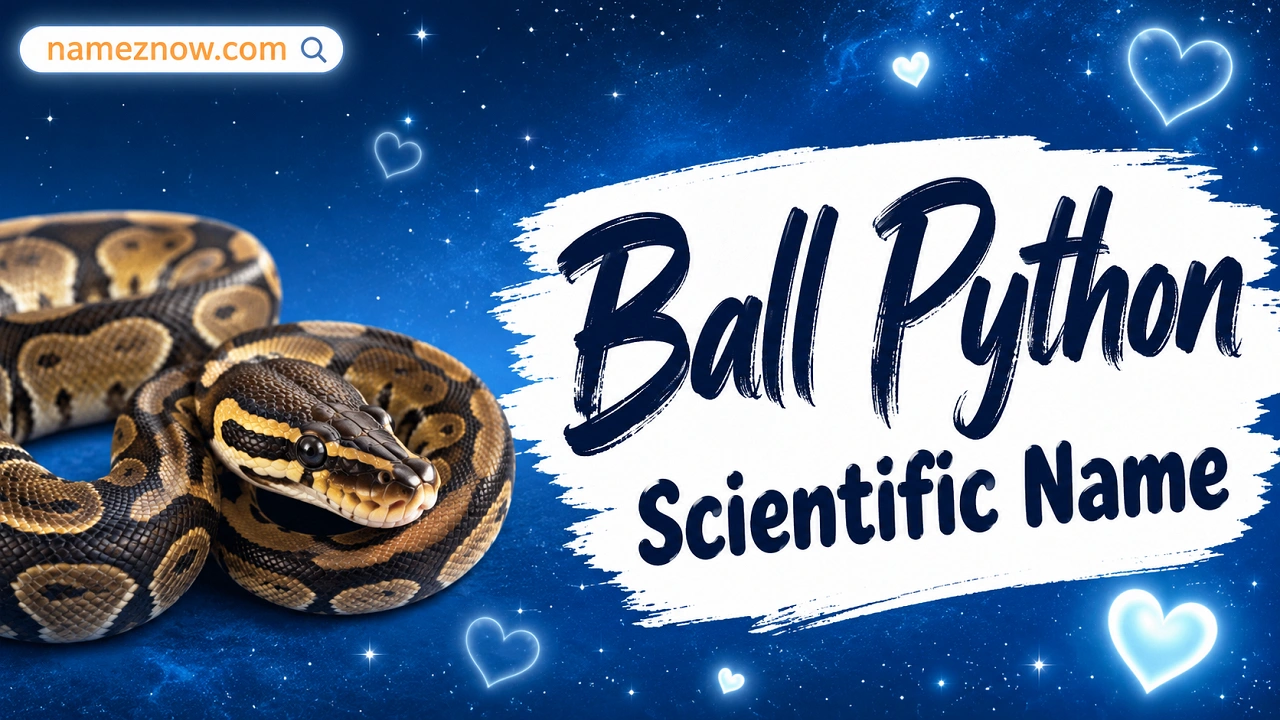
The ball python scientific name is interesting to learn if you love snakes or want one as a pet. Knowing the scientific name helps you understand more about this gentle reptile. It also makes it easier to learn from trusted books and websites. This guide explains the ball python scientific name in a simple and fun way for readers of all ages today.
Ball pythons are calm, friendly snakes that many families and reptile fans enjoy. They are famous for curling into a tight ball when they feel scared. That special behavior gave them their common name. Learning the ball python scientific name also helps you understand where this amazing snake belongs in the animal world and why scientists use scientific names.
In this guide, you will discover easy facts about the ball python scientific name, its meaning, and its history. We use clear and trusted information that is simple to read and understand. Whether you are a student, a beginner, or a future reptile owner, this article will help you learn something new and enjoy exploring the fascinating world of ball pythons with confidence every day.
Fun Facts About Ball Pythons
Ball python scientific name is an interesting topic because it helps us learn more about this popular pet snake. Ball pythons are calm, gentle, and easy to care for, which is why many beginners choose them. Before learning their scientific name, it is fun to discover some amazing facts about these unique reptiles.
Ball pythons come from Africa and spend much of their time hiding in burrows or under plants. They are most active during the evening and at night. When they feel scared, they roll into a tight ball and tuck their head inside. This behavior gave them the common name “ball python.”
Moreover, these snakes can live for many years with proper care. They are non-venomous and use their strong bodies to catch prey. Learning the ball python scientific name helps you understand where this reptile belongs in the animal kingdom and why scientists use scientific names.
| Fact | Information |
| Scientific Name | Python regius |
| Common Name | Ball Python |
| Animal Type | Reptile |
| Native Region | West and Central Africa |
| Average Length | 3–5 feet |
| Weight | 3–5 pounds |
| Lifespan | 20–30 years |
| Diet | Small mammals and birds |
| Activity | Mostly nocturnal |
| Temperament | Calm and gentle |
| Defense | Curls into a ball |
| Family | Pythonidae |
| Genus | Python |
| Conservation Status | Least Concern |
| Venom | Non-venomous |
What Is the Ball Python Scientific Name?
The ball python scientific name is Python regius. Scientists use this scientific name to identify the species accurately around the world. Unlike common names, scientific names stay the same in every country, making communication much easier.
The first word, Python, is the genus. The second word, regius, is the species name. Together, they create the complete scientific name. This naming system helps scientists group animals based on their shared characteristics.
Furthermore, learning the ball python scientific name helps students, pet owners, and reptile lovers understand how this snake fits into the natural world. It also makes reading books and scientific articles much easier.
| Scientific Term | Details |
| Scientific Name | Python regius |
| Genus | Python |
| Species | regius |
| Common Name | Ball Python |
| Language | Latin |
| Named By | George Shaw |
| Year Described | 1802 |
| Family | Pythonidae |
| Order | Squamata |
| Class | Reptilia |
| Phylum | Chordata |
| Kingdom | Animalia |
| Domain | Eukaryota |
| Type | Constrictor Snake |
| Venom | None |
Meaning of the Ball Python Scientific Name
The ball python scientific name has an interesting meaning. The word Python comes from Greek mythology and refers to a large snake. Scientists use it for all snakes in the Python genus.
The second word, regius, is a Latin word that means “royal” or “kingly.” Because of this, some people also call the ball python the Royal Python. The name reflects the snake’s beautiful appearance and its historical importance.
In addition, scientific names help avoid confusion between different animals. Although common names may change from one country to another, the ball python scientific name always remains Python regius.
| Word | Meaning | Origin |
| Python | Large snake | Greek |
| Regius | Royal | Latin |
| Scientific Name | Official species name | Biology |
| Binomial | Two-word naming system | Latin |
| Genus | Group of related species | Latin |
| Species | Individual animal type | Latin |
| Taxonomy | Animal classification | Greek |
| Reptilia | Reptile class | Latin |
| Squamata | Scaled reptiles | Latin |
| Pythonidae | Python family | Latin |
| Animalia | Animal kingdom | Latin |
| Chordata | Animals with a backbone | Greek |
| Eukaryota | Organisms with complex cells | Greek |
| Royal Python | Common alternate name | English |
| Scientific Classification | Biological grouping | Biology |
Ball Python Classification
The ball python scientific name becomes easier to understand when you learn its classification. Scientists organize living things into groups based on shared features. This system helps people study animals more clearly.
Ball pythons belong to the reptile class because they have scales, lay eggs, and are cold-blooded. They also belong to the python family because they are large constrictor snakes that do not use venom.
Furthermore, scientific classification connects the ball python with other reptiles that share similar characteristics. This organized system helps researchers identify animals correctly across the world.
| Classification Level | Name |
| Domain | Eukaryota |
| Kingdom | Animalia |
| Phylum | Chordata |
| Class | Reptilia |
| Order | Squamata |
| Family | Pythonidae |
| Genus | Python |
| Species | Python regius |
| Common Name | Ball Python |
| Animal Type | Reptile |
| Diet | Carnivore |
| Reproduction | Egg-laying |
| Body Covering | Scales |
| Venom | None |
| Scientific System | Binomial Nomenclature |
Ball Python Kingdom, Phylum, Class, Order, Family, and Genus
Learning the ball python scientific name becomes much easier when you understand its scientific classification. Scientists group animals by their shared features. This system helps researchers study, compare, and identify living things across the world.
Each classification level tells us something important about the ball python. For example, it belongs to the kingdom Animalia because it is an animal. It belongs to the class Reptilia because it has scales and is cold-blooded. Finally, it belongs to the genus Python, which includes several large, non-venomous snakes.
Moreover, scientific classification makes learning about wildlife simple and organized. Whether you are a student or a reptile lover, understanding the ball python scientific name helps you learn how this amazing snake fits into the animal kingdom.
| Classification Level | Name | Description |
| Domain | Eukaryota | Organisms with complex cells |
| Kingdom | Animalia | All animals |
| Phylum | Chordata | Animals with a backbone |
| Class | Reptilia | Reptiles with scales |
| Order | Squamata | Lizards and snakes |
| Family | Pythonidae | Python family |
| Genus | Python | Group of true pythons |
| Species | Python regius | Ball python species |
| Scientific Name | Python regius | Official scientific name |
| Common Name | Ball Python | Everyday name |
| Animal Type | Reptile | Cold-blooded vertebrate |
| Diet | Carnivore | Eats other animals |
| Reproduction | Oviparous | Lays eggs |
| Habitat | Grasslands and forests | Natural home |
| Conservation Status | Least Concern | Stable population |
Why Do Ball Pythons Have a Scientific Name?
The ball python scientific name helps scientists identify this snake correctly. Many animals have different common names in different countries. However, a scientific name stays the same everywhere. This makes learning and research much easier.
Scientists use the system called binomial nomenclature, which gives every species a unique two-word name. In the case of the ball python, the official name is Python regius. This system prevents confusion and allows experts to communicate clearly.
Furthermore, scientific names show how animals are related to one another. They also help students, researchers, veterinarians, and pet owners learn accurate information from trusted sources. Because of this, the ball python scientific name is important in science and education.
| Topic | Information |
| Scientific Name | Python regius |
| Naming System | Binomial nomenclature |
| Number of Words | Two |
| Language Used | Latin |
| Purpose | Correct identification |
| Used By | Scientists worldwide |
| Helps With | Research |
| Helps With | Conservation |
| Helps With | Education |
| Prevents | Name confusion |
| First Word | Genus |
| Second Word | Species |
| Common Name | Ball Python |
| Scientific Field | Taxonomy |
| Benefit | Universal understanding |
History of the Ball Python Scientific Name
The ball python scientific name has an interesting history that dates back more than two hundred years. In 1802, the British zoologist George Shaw officially described this snake and gave it the scientific name Python regius. Scientists still use this name today because it follows international naming rules.
The word regius means “royal” in Latin. Many experts believe the name reflects the snake’s beautiful appearance and historical importance. Ancient African rulers were sometimes linked with these snakes, which is why the name “Royal Python” is also common.
Today, researchers around the world continue to study Python regius. Although new discoveries help us understand this species better, its scientific name has remained the same. Therefore, the ball python scientific name continues to provide a reliable way to identify this remarkable reptile.
| Historical Fact | Details |
| Scientific Name | Python regius |
| First Described | 1802 |
| Scientist | George Shaw |
| Nationality | British |
| Language | Latin |
| Meaning of regius | Royal |
| Common Alternate Name | Royal Python |
| Scientific System | Binomial nomenclature |
| Animal Group | Reptiles |
| Family | Pythonidae |
| Native Continent | Africa |
| Scientific Use | Species identification |
| Current Status | Official scientific name |
| Research Importance | Global identification |
| Used Worldwide | Yes |
Ball Python Habitat and Distribution
The ball python scientific name belongs to a snake that naturally lives in West and Central Africa. These snakes prefer warm places with grasslands, open forests, and shrublands. They also spend time inside burrows, under logs, or in thick plants to stay safe and cool.
Ball pythons are found in countries such as Ghana, Togo, Benin, Nigeria, Cameroon, and Uganda. Because they enjoy warm climates, they thrive in tropical and subtropical regions. During the day, they usually rest in hiding places. However, they become active in the evening while searching for food.
Moreover, ball pythons have adapted well to their natural habitats. Their calm nature and manageable size have also made them one of the world’s most popular pet snakes. Learning about their habitat helps owners provide better care while understanding the importance of protecting wild populations.
| Habitat Feature | Information |
| Native Continent | Africa |
| Main Region | West and Central Africa |
| Climate | Tropical |
| Habitat Type | Grasslands |
| Habitat Type | Open Forests |
| Habitat Type | Shrublands |
| Shelter | Burrows |
| Shelter | Hollow Logs |
| Activity Time | Night |
| Favorite Temperature | Warm |
| Common Countries | Ghana |
| Common Countries | Benin |
| Common Countries | Togo |
| Common Countries | Nigeria |
| Common Countries | Cameroon |
Ball Python Physical Characteristics
The ball python scientific name, Python regius, belongs to a snake with a strong but gentle body. Ball pythons are easy to recognize because of their beautiful patterns and smooth scales. Their colors usually include brown, black, gold, and cream, which help them blend into their natural surroundings.
Most adult ball pythons grow between 3 and 5 feet long. Females are usually larger than males. Although they have muscular bodies, they are not heavy compared to many other python species. Their small head, shiny eyes, and heat-sensing pits help them find food, especially at night.
Moreover, selective breeding has created many colorful ball python morphs. These unique patterns make ball pythons one of the most popular pet snakes in the world. Learning these physical features helps you identify the species and better understand the ball python scientific name.
| Physical Characteristic | Information |
| Scientific Name | Python regius |
| Common Name | Ball Python |
| Average Length | 3–5 feet |
| Average Weight | 3–5 pounds |
| Body Shape | Thick and muscular |
| Skin | Smooth scales |
| Common Colors | Brown, black, gold, cream |
| Pattern | Blotches and stripes |
| Head Shape | Small and rounded |
| Eyes | Medium-sized |
| Heat-Sensing Pits | Present |
| Tail | Short and strong |
| Venom | Non-venomous |
| Movement | Slithering |
| Defense | Rolls into a ball |
Ball Python Behavior and Diet
The ball python scientific name refers to a calm and shy snake. Ball pythons usually avoid danger instead of attacking. When they feel frightened, they curl into a tight ball and hide their head inside their coils. This unique behavior gave them the common name “ball python.”
These snakes are mostly active during the evening and at night. During the day, they rest inside burrows, hollow logs, or thick plants. Because they are excellent hunters, they quietly wait for prey before striking with speed and accuracy.
Furthermore, ball pythons are carnivores. They mainly eat small mammals such as mice and rats. In the wild, they may also eat small birds. Instead of using venom, they wrap their strong bodies around prey and gently squeeze until they can safely swallow it.
| Behavior or Diet | Information |
| Scientific Name | Python regius |
| Activity Time | Nocturnal |
| Temperament | Calm and gentle |
| Defense | Curls into a ball |
| Hunting Method | Ambush hunter |
| Diet Type | Carnivore |
| Main Food | Mice |
| Main Food | Rats |
| Other Food | Small birds |
| Feeding Method | Constriction |
| Venom | None |
| Shelter | Burrows |
| Movement | Slow and quiet |
| Habitat Activity | Ground dwelling |
| Pet Suitability | Excellent for beginners |
Ball Python Lifespan and Reproduction
The ball python scientific name belongs to one of the longest-living pet snakes. With proper care, a ball python can live for 20 to 30 years. Some pet ball pythons have even lived longer in safe and healthy environments. Good food, clean housing, and regular care help them stay healthy.
Ball pythons reproduce by laying eggs. During the breeding season, the female lays about 4 to 10 eggs, although some may lay more. She wraps her body around the eggs to keep them warm until they hatch. This protective behavior helps the young snakes develop safely.
After about 55 to 60 days, the baby ball pythons hatch and begin life on their own. They can hunt small prey shortly after hatching. Understanding the lifespan and reproduction of Python regius helps owners provide better care and appreciate the fascinating life cycle of this amazing snake.
| Lifespan and Reproduction | Information |
| Scientific Name | Python regius |
| Average Lifespan | 20–30 years |
| Longest Recorded Lifespan | Over 40 years |
| Reproduction | Egg-laying |
| Breeding Season | Cooler months |
| Eggs Per Clutch | 4–10 |
| Incubation Period | 55–60 days |
| Baby Name | Hatchling |
| Hatchling Length | 10–17 inches |
| Sexual Maturity | 2–3 years |
| Female Role | Protects eggs |
| Parental Care | Until hatching |
| Diet of Hatchlings | Small rodents |
| Growth Rate | Steady with proper care |
| Conservation Status | Least Concern |
Conclusion about ball python scientific name
Learning the ball python scientific name is a great way to understand this gentle and fascinating snake. The scientific name, Python regius, does more than identify the species. It also connects the ball python to its place in the animal kingdom and helps scientists, students, pet owners, and nature lovers use the same name around the world.
Throughout this guide, you explored the meaning of the ball python scientific name, its scientific classification, history, habitat, physical characteristics, behavior, diet, lifespan, and reproduction. Each topic helps you build a stronger understanding of this amazing reptile. Whether you are researching for school or thinking about keeping a ball python as a pet, these facts give you a solid foundation.
We hope this article has made the ball python scientific name easy to understand. Keep learning about wildlife, ask questions, and explore trusted sources whenever you want to discover more. The more you learn about animals, the more you can appreciate the incredible diversity of nature and the important role every species plays.
FAQs about ball python scientific name
What is the ball python scientific name?
The ball python scientific name is Python regius. Scientists use this official name to identify the species everywhere in the world. Unlike common names, the scientific name stays the same in every language, making research, education, and communication much easier and more accurate.
Why is the ball python called Python regius?
The word Python refers to its genus, while regius is a Latin word that means “royal.” Because of this meaning, the ball python is also known as the Royal Python. The name reflects the snake’s elegant appearance and long history of scientific study.
Who gave the ball python its scientific name?
The British zoologist George Shaw officially described the species in the early nineteenth century and named it Python regius. Scientists still use this name today because it follows international scientific naming rules and accurately identifies the species.
Where do ball pythons live in the wild?
Ball pythons naturally live in West and Central Africa. They prefer grasslands, open forests, and areas with plenty of hiding places. During the day, they often stay inside burrows or under logs. At night, they become active and search for food.
Are ball pythons venomous?
No, ball pythons are not venomous. They catch prey by wrapping their strong bodies around it in a process called constriction. This makes them different from venomous snakes that rely on venom to capture food or defend themselves.
Why do scientists use scientific names instead of common names?
Scientific names help avoid confusion because many animals have different common names in different countries. The ball python scientific name always refers to the same species, making it easier for researchers, veterinarians, teachers, and students to share accurate information.
What does the word regius mean?
The word regius comes from Latin and means “royal” or “kingly.” This is why many people also call the species the Royal Python. The name highlights the snake’s striking appearance and its respected place among python species.
What family does the ball python belong to?
The ball python belongs to the Pythonidae family. This family includes large, non-venomous snakes that use constriction to catch prey. Ball pythons are one of the smallest members of this family, making them popular pets for beginners.
How long do ball pythons live?
With proper care, ball pythons often live between twenty and thirty years. Some have lived even longer in captivity. A healthy diet, clean habitat, proper temperature, and regular veterinary care all help support a long and healthy life.
Is the ball python a good pet for beginners?
Yes, many people consider the ball python one of the best pet snakes for beginners. It has a calm temperament, manageable size, and simple care requirements. With proper research and responsible care, it can become a long-term and rewarding companion.